
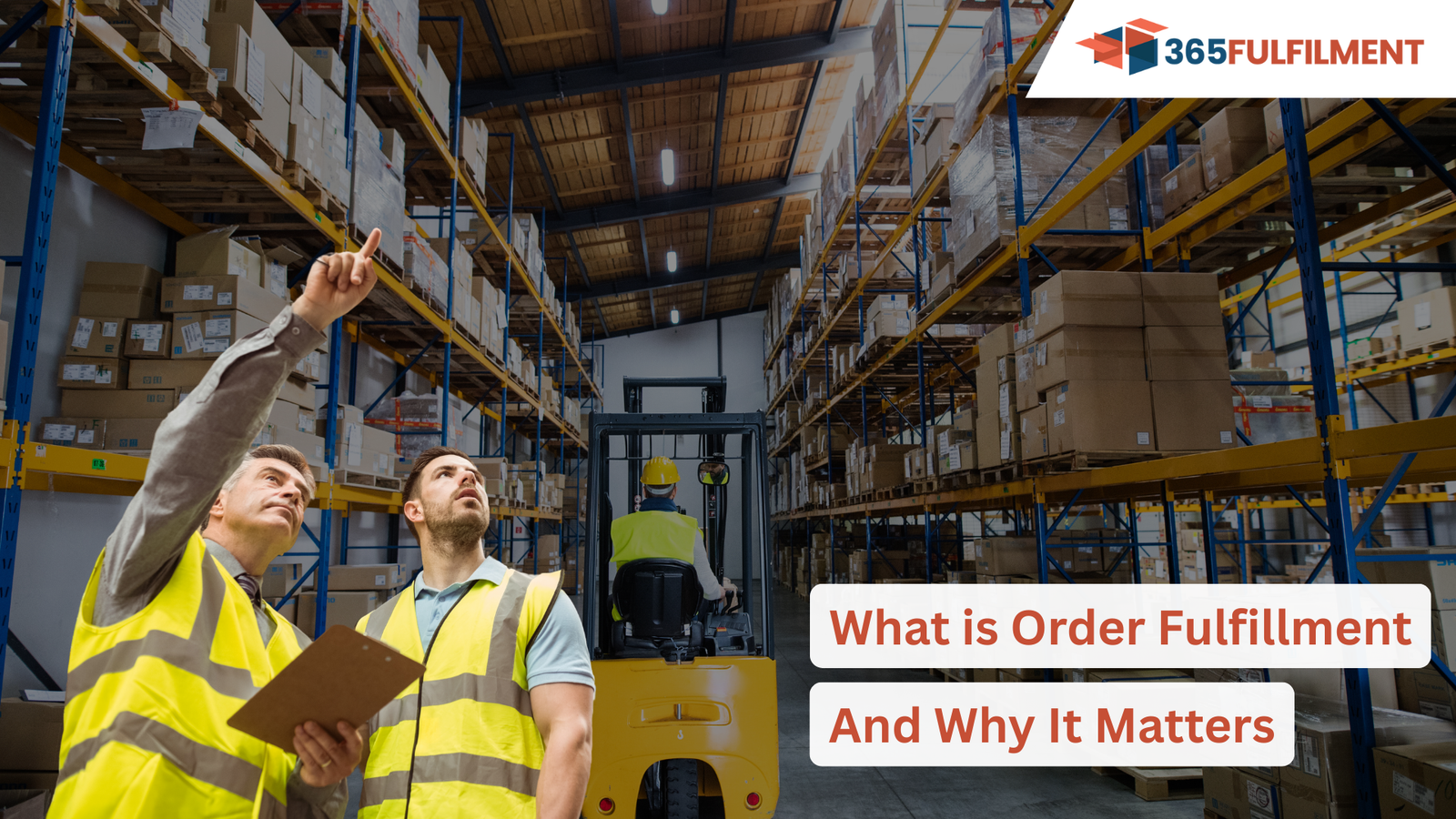
The order fulfilment process covers receiving inventory, storing it, accepting orders, picking, packing, dispatching and handling returns. Dispatch is the handover to a carrier; delivery is the later arrival with the customer.
In today’s fast-paced e-commerce world, customer expectations are higher than ever. From next-day shipping to real-time tracking, online shoppers demand efficiency, accuracy, and transparency. At the heart of meeting those expectations lies a critical process known as order fulfilment.
If you’re running an online business or planning to start one, understanding how order fulfilment works—and why it matters—can be the key to scaling successfully, retaining customers, and staying competitive. In this article, we’ll dive deep into what order fulfilment is, its stages, its importance, and how outsourcing it can transform your business.
What is Order Fulfilment?
Order fulfilment is the process of receiving, processing, packing, and shipping customer orders. It includes everything that happens between the moment a customer places an order and the time it arrives at their doorstep—or is returned.
Whether you’re fulfilling orders in-house, using third-party logistics (3PL), or working with an Amazon prep center, the goal is the same: deliver the right product to the right customer, as quickly and cost-effectively as possible.
Key Stages of Order Fulfilment
Let’s break down the typical steps involved in order fulfilment:
1. Receiving Inventory
The process begins when products arrive at a fulfilment center or warehouse. The goods are checked for accuracy and quality before being stored.
2. Storage
Products are organised and stored in a secure, easily accessible way. Efficient storage systems reduce picking times and errors.
3. Order Processing
Once a customer places an order, the fulfilment software locates the item in the warehouse, generates a pick list, and begins the packing process.
4. Picking and Packing
Warehouse staff picks the items and packs them according to specific guidelines, which might include branded packaging, custom inserts, or eco-friendly materials.
5. Shipping
Orders are handed over to shipping carriers, and tracking numbers are generated. Many fulfilment centers integrate directly with major couriers to streamline this step.
6. Returns Processing
If the customer sends the product back, the fulfilment provider processes the return, inspects the item, and updates the inventory.
Why Order Fulfilment Matters
Order fulfilment isn’t just a backend process—it directly affects your customer’s experience and your business success. Here’s why it matters:
1. Customer Satisfaction
Fast, accurate, and reliable delivery leads to happy customers. Delays, wrong items, or damaged products can ruin a shopping experience and lead to negative reviews.
2. Scalability
When you’re just starting out, self-fulfilment might work. But as you grow, managing hundreds or thousands of orders becomes overwhelming. Streamlined fulfilment helps you scale without sacrificing service.
3. Operational Efficiency
A well-managed fulfilment process reduces order errors, minimizes returns, and improves inventory control—all of which save time and money.
4. Competitive Advantage
In a market where same-day or next-day delivery is expected, efficient fulfilment gives your brand a clear edge.
5. Focus on Growth
Outsourcing fulfilment allows you to focus on marketing, product development, and customer relationships while experts handle logistics.
In-House Fulfilment vs. Outsourcing
Should you fulfill orders yourself or partner with a third-party provider? Here’s a quick comparison:
| Aspect | In-House Fulfilment | Outsourced Fulfilment |
|---|---|---|
| Control | Full control over packing, branding, and customer service | Less direct control |
| Cost | High startup cost for space, staff, and software | Lower upfront cost, pay-per-order pricing |
| Scalability | Limited by physical space and labor | Easily scalable with demand |
| Expertise | You manage all logistics | Experts handle warehousing and shipping |
| Speed | Can be fast for small volume | Often faster due to automation and courier partnerships |
The Rise of Fulfilment Centers and Amazon Prep Services
With the growth of online marketplaces like Amazon, eBay, and TikTok Shop, specialised fulfilment centers have emerged to support sellers. These include:
🔹 Amazon Prep Services
Amazon FBA sellers must follow strict guidelines. Prep centers help with labelling, polybagging, bundling, and shipment to Amazon warehouses. They ensure compliance and streamline the entire FBA process.
🔹 TikTok Prep Services
As TikTok evolves into a serious e-commerce platform, prep services for TikTok sellers focus on fast order processing, creative packaging, and ready-to-ship solutions that align with social media-driven shopping.
These services free up time and reduce the stress of managing fulfilment while ensuring compliance with marketplace requirements.
Features to Look for in a Fulfilment Partner
When choosing a fulfilment company, look for these features:
- 24/7 Online Dashboard – Manage inventory, track orders, and get reports in real time.
- No Minimum Orders – Ideal for startups and small businesses.
- Same-Day Dispatch – A must for customer satisfaction.
- Custom Packaging Options – Boost brand presence with unique packaging.
- Returns Handling – Hassle-free customer service management.
- Compliance – Ensure the provider is licensed and meets all local regulations (e.g., HMRC FHDDS in the UK).
- Eco-Friendly Practices – Choose providers who prioritize sustainability.
Common Order Fulfilment Challenges
Even with the best systems, order fulfilment comes with challenges:
- Stockouts – Poor inventory management can lead to delays.
- Shipping Errors – Wrong addresses or lost parcels can result in unhappy customers.
- Returns – Managing returns can be costly and complex.
- Scaling – Rapid growth can overwhelm in-house systems.
A good fulfilment partner will have systems in place to mitigate these risks and handle seasonal spikes, sales surges, and returns efficiently.
What does each order status actually mean?
Agree a shared status glossary between your shop, warehouse and support team. An order appearing in the store is not evidence that the warehouse has received it, and a generated label is not evidence that a carrier has collected it.
- Received: the warehouse has accepted the order data.
- Allocated: the required stock has been reserved.
- Packed: the physical order is ready for the agreed handover.
- Dispatched: the agreed handover event has occurred.
- Delivered: the carrier has recorded delivery through its service.
- Returned: goods have arrived back and need the agreed inspection decision.
Providers may use different names, so map meanings rather than assuming labels are identical. Confirm which timestamp and evidence are used in reports.
What happens if an order cannot be fulfilled?
Identify whether the problem is unavailable stock, missing information, a product restriction or a system error. Assign an owner and a customer communication route. Avoid leaving the order in an ambiguous processing status.
Does fulfilment include customer refunds?
Not automatically. Physical inspection and restocking are separate from approving a refund. The merchant should define the decision rules and responsibilities.
Explore order fulfilment services in Nottingham, read what a 3PL provider handles, and use the fulfilment recovery checklist when exceptions interrupt the normal sequence.
Conclusion
Order fulfilment is more than just packing and shipping. It’s a critical component of the customer journey and your overall business strategy. Whether you’re a new e-commerce seller or an established brand, investing in a solid fulfilment process—or partnering with a trusted provider—can mean the difference between stagnation and scalable growth.
By ensuring that products are picked, packed, and shipped with accuracy and speed, you build trust with your customers, increase repeat purchases, and strengthen your brand in a crowded marketplace.
Ask 365 Fulfilment to confirm dispatch arrangements, tracking, minimum charges and the workflow for your products before onboarding.

4 Responses